Memory & knowledge systems

A world model that remembers what changed.

Memory and knowledge is dated, sourced memory for compliance leads, so that any answer can be read as of the day it mattered, with later changes shown apart.

  • Enterprises & institutions
  • Time-aware memory
  • Source & authority
Discuss your knowledge environment
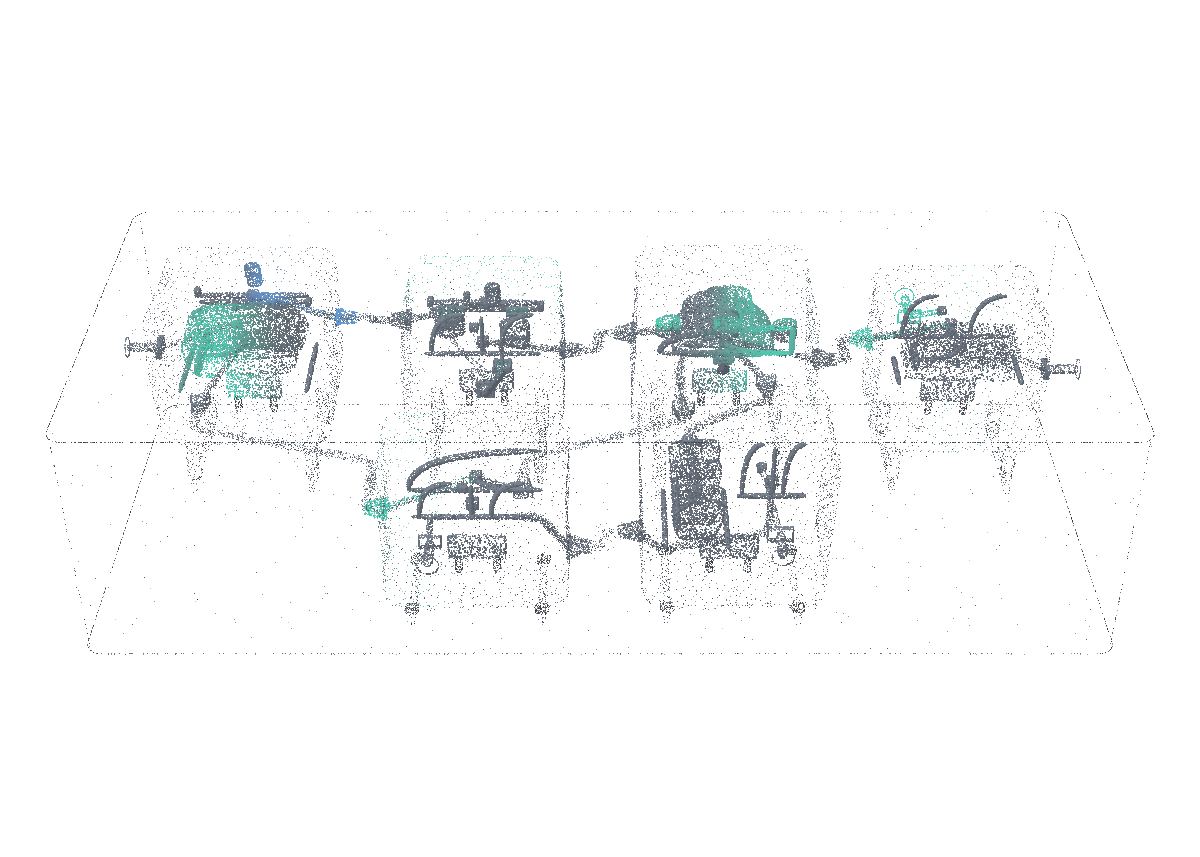
Source history, temporal interpretation and recall. An illustrative method for retaining canonical evidence and answering scoped historical questions.
Loading model
Technical descriptionsInteractive model unavailable. The static illustration and descriptions remain available.
Attributed record store
Preserve source-connected history with two distinct time axes.
Technical data

Inputs

Original or changed policy with source and both time axes.

Transformation

Preserve source-connected history with two distinct time axes.

Retained state and outputs

Source, holder, validity and recorded-at time.

Earlier records and operation ancestry.

Constraints

Valid time and recorded-at time remain distinct.

Claim-operation interpreter
Apply the actual semantics of revision, contest and historical use.
Technical data

Inputs

Claims and typed operations.

Validity time, knowledge time and scope.

Transformation

Apply the actual semantics of revision, contest and historical use.

Retained state and outputs

Supersession, contest, suppression and retraction differ.

Validity question and knowledge cutoff.

Constraints

Supersession, contest, suppression and retraction have different historical meanings.

Bounded retrieval and indexes
Assemble relevant evidence without confusing derived lookup with canonical memory.
Technical data

Inputs

Historically appropriate or contested evidence.

Rebuilt derived structures; canonical history remains.

Transformation

Assemble relevant evidence without confusing derived lookup with canonical memory.

Retained state and outputs

Derived lookup and canonical-source link.

Scope/byte bounds and explicit abstention.

Constraints

A derived lookup does not replace canonical source memory.

Contextual relation assembly
Relate the selected evidence to the right responsibility and objective.
Technical data

Inputs

Bounded source-bearing selection or abstention.

Selected role/objective and explicit corrections.

Transformation

Relate the selected evidence to the right responsibility and objective.

Retained state and outputs

Selected identity, role, infrastructure and purpose.

Corrected inference with its lineage.

Constraints

A corrected inference retains its source and responsibility context.

Maintenance and promotion
Annotate, test and retain useful derived structures without rewriting history.
Technical data

Inputs

Canonical records and typed retention requirements.

Measured harms, utility and remaining uncertainty.

Transformation

Annotate, test and retain useful derived structures without rewriting history.

Retained state and outputs

Duplicates, conflict and typed retention/forgetting.

Proposed generalization remains distinct from promoted instruction.

Constraints

A proposed generalization does not silently become an instruction.

Evaluation and reuse register
Keep actual utility, failures and subsequent-use evidence available.
Technical data

Inputs

Actual retrieval use, not automatic future utility.

Independent useful/failing reuse evidence.

Transformation

Keep actual utility, failures and subsequent-use evidence available.

Retained state and outputs

Measured failure and caution/release basis.

Attributed retrieval use and independent future utility.

Constraints

Claims of future usefulness need independent later-use evidence.

An illustrative method for retaining canonical evidence and answering scoped historical questions.

Additional mechanisms are described in the technical reference.

What the research says

Finding a document is half the question.

The other half is whether it applied on the day in question.

Teams report spending a quarter of the workweek searching, and commercial legal tools built on retrieval still gave wrong answers 17% to 33% of the time. Retrieval finds a document; it says nothing about whether that document applied on the day in question. The memory layer stores when each claim applied and when it was recorded, so a compliance lead can read the answer as of a date and see later changes apart.12

An earlier decision needs its earlier world.

An institution changes a policy on Thursday. A reviewer needs the rule that applied on Monday and what was known when Monday’s decision was made. The next task needs the current rule. A single current document or a plausible summary cannot answer all three questions.

Our knowledge architecture separates source records, claims, their validity and the time they were observed. A dedicated world model connects those records to identities, responsibilities, objectives and the systems a person or organization chooses to connect.

Vagus resolves time and authority. Agency Engine maintains product and organization context through versioned memory operations. The Vault carries methods, assumptions and evidence into reuse. This gives an intelligence environment more structure than an archive of conversation text.

Time and authority are part of the data model.

Vagus’s claim algebra separates what a statement says from who supplied it, when it applies and what operations later changed its status.

Two time axes

Validity time answers when a claim applied. Observation time answers when it entered the record. An as-of query can preserve the earlier state of knowledge.

Input

Claims and operations with timestamps.

Output

The applicable evidence at the requested time basis.

Authority by ancestry

The effective authority of a derived claim is bounded by the minimum authority along its contributing ancestry. A missing ancestor or cycle cannot create stronger evidence.

Conflict stays visible

Claims of equal scope and authority that disagree can remain contested. Supersede, revise, contest, suppress and retract carry different meanings.

Recall suppression is not historical deletion

Suppressing a claim from ordinary recall is distinct from changing its validity or retracting it. The canonical operation record retains the distinction.

What was true on 3 March?

The compliance lead asks with a date; knowledge is read as of that date, and later changes are shown apart. Illustrative.

  1. 1 of 4A compliance lead asks which customer-screening rule applied on 3 March, for a regulator’s file.
  2. 2 of 4Knowledge is read as of 3 March: screening rule version 2, as recorded by that date.
  3. 3 of 4A correction recorded on 20 March reaches back to 1 March; it appears with the date it was recorded.
  4. 4 of 4The lead sees what the file said on 3 March and what is known now, and decides how to explain the difference to the regulator.Decision: The compliance lead decides how to present the correction.
Select any part of the drawingScroll to step · Esc to skipFig. 1
  1. 1 of 4An auditor asks the compliance lead why a file was closed under a rule that no longer exists.
  2. 2 of 4Knowledge is read as of the closing date: Rule A was in force, and its source is attached.
  3. 3 of 4Rule B superseded Rule A later; it links to the rule it replaced, and Rule A stays readable.
  4. 4 of 4The lead shows both rules with their dates and decides whether files closed under Rule A need review.Decision: The compliance lead decides whether to reopen files.
Select any part of the drawingScroll to step · Esc to skipFig. 1
  1. 1 of 4The compliance lead asks what approval limit regional managers had on 3 March.
  2. 2 of 4Two sources of equal authority gave different limits that day: the policy manual and a regional memo.
  3. 3 of 4Knowledge keeps the disagreement as a contested claim instead of choosing the more recent source.
  4. 4 of 4The answer shows both sources and their authority; the compliance lead rules which one governs, and the ruling is recorded.Decision: The compliance lead rules which source governs.
Select any part of the drawingScroll to step · Esc to skipFig. 1

Where it changes the work.

Illustrative situations, connected to the mechanisms that make them possible.

An institution remembers its decisions

Institutions

A policy changes, but earlier claims and the reasons for past decisions still matter.

How it works
Validity intervals, authority ancestry and contested claims preserve the history of understanding.
What changes
A new decision can distinguish the current position from an earlier or unsupported one.

Find the mechanism before building again

R&D and software teams

A new problem may overlap earlier engineering in another project.

How it works
Typed component and method registers retain contracts, scientific references and lineage.
What changes
The team can inspect a candidate and the evidence behind its reuse.

Keep a small team’s commercial memory

Founders and small teams

A prospect moves between a public page, a question and a private conversation.

How it works
Person, offer, touch and conversation records share one commercial context.
What changes
The team can continue the relationship without repeatedly reconstructing the business or the discussion.

The index can be rebuilt. The evidence remains canonical.

The memory store uses holder-scoped, append-only records with keyed integrity chains. Its retrieval index is a derived view rather than a second editable history.

Rebuildable search

A SQLite FTS5 index combines claim, lesson, failure and episode pointers. Rebuild writes a temporary index and swaps it into place atomically.

Input

Verified canonical records.

Output

A replaceable retrieval index.

Bounded recall

Recall limits both items and bytes. Ranking combines textual relevance, authority, scope and use-based activation; a result retains its matched evidence and source pointer.

Input

A query, scope and output budget.

Output

Evidence-bearing items, withheld items or an abstention reason.

Integrity-aware reading

Readers use the verified prefix of the record chain and retain a finding for unverified material. A broken tail cannot silently become trusted context.

Partitioned use

Holder boundaries travel with storage and retrieval. A useful match does not grant permission to disclose the material or act on it.

Distributed memory preserves the disagreement before interpreting it.

Agency Engine separates accumulation from interpretation. Its per-origin set merge preserves the information needed to distinguish a changed fact, an incorrect belief and a disagreement between sources.

Convergent accumulation

The data layer merges an observed-remove set by union. The element identity contains both the claim and its origin, so two sources asserting the same fact remain two attributable elements.

Input

Claim/origin elements and their memory operations.

Output

A convergent accumulated set with source identity retained.

Deterministic interpretation

A pure read-time function interprets the canonically ordered set under scope, authority, temporal validity and conflict rules. A revised interpretation can rebuild the projection without rewriting the underlying history.

Typed forgetting

Decayed, never-captured, unlearned and superseded describe different events. Memory maintenance can nominate a change while preserving the historical source and its approved validity operations.

Generalization before promotion

A recurring cluster can justify proposing a generalization. Promotion, retrieval evidence and retention have separate contracts; repeated access inside one concentrated session does not become independent spaced evidence.

The inspected thresholds are declared policy choices. Future utility and retention are evaluated for the domain.

Experience becomes useful through distinct operations.

Agency Engine separates recall, proposed generalization, memory maintenance and typed forgetting. Vagus’s failure memory and the Vault’s evidence contracts retain different kinds of consequence.

  1. Keep the event

    An episode or attributed claim retains the source behind a decision, correction or failure. Repeated copies do not become independent supporting origins.

  2. Maintain the knowledge

    Duplicate detection, conflict annotations, decay nomination and approved validity changes are explicit operations. A tidy summary cannot silently replace the source history.

  3. Retain a measured failure

    Vagus records defined harms with decay and hysteresis. Restrictive failure memory can keep a known failing context from being treated as a fresh unexamined choice.

  4. Carry assumptions into reuse

    A Vault method keeps its contracts and evidence lineage. Unresolved composition assumptions remain visible to the next application.

Remembering and retraining change different things.

Proprietary operating knowledge can improve the context for future work. Updating a model is a separate intervention with a different data and evaluation contract.

World-model and retrieval updates

A corrected policy or preference changes the records and context used for future tasks. The underlying foundation-model weights can remain fixed.

Calibration and procedure updates

Recorded outcomes can change a task estimate, selection policy or approved workflow. Their acceptance basis is specific to the recurring task.

Model/adaptor research

A trainable model can be studied using permitted examples and held-out future work. Retention, exposure, cost and recovery belong to that study.

Context
An eligible model and authorized data use.
Experience
A candidate evaluated against retrieval/no-update baselines.
Scope
This service research direction does not assert deployed recursive weight training.

Specifications and interfaces.

Inputs, retained state, outputs and limits of Naevum’s Memory & knowledge systems architecture.

Bitemporal claim query
Validity intervals and recorded-at cutoffs distinguish the world at a time from what the system knew at a time.
Authority inheritance
Derived authority is capped by contributing ancestry. Missing parents, cycles and unsupported derivations do not promote a claim.
Claim operation algebra
Supersede, revise, contest, suppress and retract affect applicability and recall differently. Conflicting top-ranked claims remain non-binding.
Holder-scoped integrity
Append-only keyed chains retain previous-record linkage and verified-prefix status. Storage boundaries remain attached to recall.
Deterministic retrieval
SQLite FTS5 supports a rebuildable index. Ranking includes relevance, binding authority, scope distance and ACT-R-inspired use activation.
Recall budget and abstention
Item and byte limits bound the returned view. Unreadable, withheld and absent results retain reasons rather than silently becoming an empty success.
Use-aware consolidation
Projection, failure memory, hygiene, index rebuilding, packs and examination are distinct stages. Canonical claims and their operations remain the historical basis.
Measured failure memory
Defined observed harms contribute to a decayed failure weight. Quarantine and release use different thresholds, and transitions retain their cause.
World-model scope
Connected sources, supported identity inferences, preferences, responsibilities and objectives form a scoped representation. The person or organization can inspect and correct that representation.
Two-layer convergent memory
An observed-remove set accumulates claim/origin elements by union. A deterministic read-time interpretation resolves the evidence without replacing the historical set.
Typed maintenance and forgetting
Decayed, never-captured, unlearned and superseded remain distinct. Recurrence, retrieval spacing, promotion and retention are separate policy decisions.

Questions about Memory & knowledge systems.

Is the world model a complete digital copy of a person?

No. It is a scoped representation of connected sources, explicit preferences and supported inferences. Its contents and limits must remain inspectable and correctable.

Memory & knowledge systems in the stack.

Works with

Temporal memory

History, evidence and attention.

Built on

Domain context

Product and organization knowledge.

Works with

Reusable knowledge

Mechanisms and their conditions.

Connected system

Continuity

Purpose and state across interruptions.

A world model you can inspect.

Connected sources become structured context. Observations keep their origin; inferences remain open to correction. This is the architecture of a dedicated engagement, shaped around the world you choose to connect.

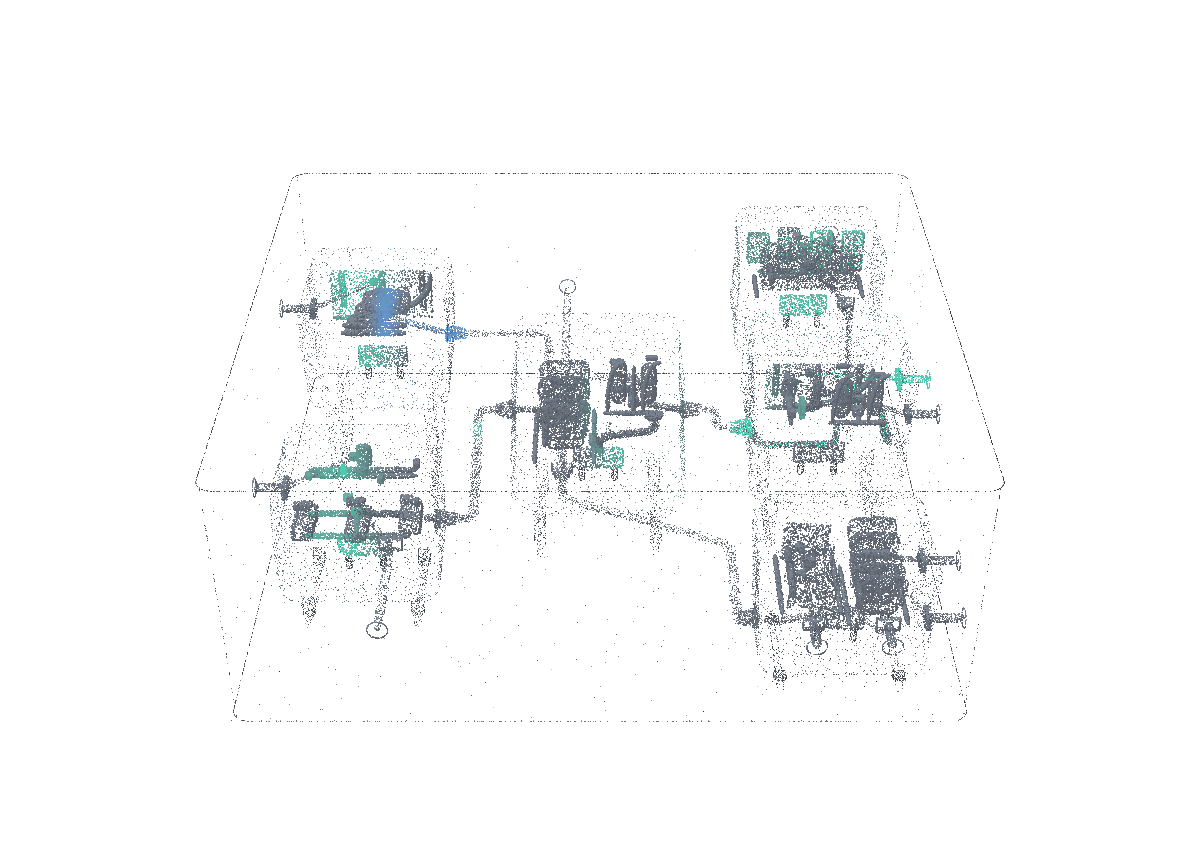
Selected context, declared purpose and distinct evidence. An illustrative context landscape relating sources, responsibilities, capabilities and possible futures.
Loading model
Technical descriptionsInteractive model unavailable. The static illustration and descriptions remain available.
Identity and responsibility anchors
Keep people, roles and delegation sources distinguishable.
Technical data

Inputs

Selected roles, accounts and responsibility sources.

Transformation

Keep people, roles and delegation sources distinguishable.

Retained state and outputs

Selected people, accounts and roles.

Delegation and responsibility sources, not inferred authority.

Constraints

A relationship or inferred role does not create authority.

Selected-source interfaces
Make inclusion, exclusion, access and freshness explicit.
Technical data

Inputs

Actual source inclusion and access; not a UI inspection event.

Independent dated observation.

Transformation

Make inclusion, exclusion, access and freshness explicit.

Retained state and outputs

Explicitly included sources and exclusions.

Dated observation, source and access state.

Constraints

Opening an explanatory panel does not include a source or grant access.

Temporal knowledge and relationships
Retain facts, claims, decisions and corrected interpretations with their lineage.
Technical data

Inputs

Source-bearing observation with time and scope.

Selected relevant role and responsibility.

Separately supplied evidence correcting an earlier inference.

Attributed action/consequence history and retained uncertainty.

Transformation

Retain facts, claims, decisions and corrected interpretations with their lineage.

Retained state and outputs

Evidence, time and unresolved contradiction.

Current inference differs from source observation; correction preserves ancestry.

Constraints

An inference remains distinguishable from its source observation.

Infrastructure and capability map
Relate selected assets and dependencies to observations and responsible operators.
Technical data

Inputs

Selected assets, capabilities and dependencies.

Transformation

Relate selected assets and dependencies to observations and responsible operators.

Retained state and outputs

Asset, dependency and operator relationships.

Known capability, unavailable integration and unknown state.

Constraints

A known capability or dependency is not an execution grant.

Purpose, preference and scenario workbench
Relate context to declared aims while keeping forecasts and inferred habits distinct.
Technical data

Inputs

Known capabilities and operator/dependency relationships; no permission.

Explicit objective, commitment or corrected preference.

Evidence connected to the declared objective and role.

Transformation

Relate context to declared aims while keeping forecasts and inferred habits distinct.

Retained state and outputs

Explicit objectives, commitments and instructions.

Inferred pattern and explicit correction.

Possible futures are forecasts, not observed facts.

Constraints

Possible futures remain forecasts rather than observed facts.

Action and consequence ledger interface
Relate proposed work to existing authority and independently observed results.
Technical data

Inputs

Possible next action grounded in corrected context.

Actual applicable decision, when supplied; context grants none.

Independent record of what actually occurred under the proposal identity.

Later observed consequence, distinct from the decision and action record.

Transformation

Relate proposed work to existing authority and independently observed results.

Retained state and outputs

Bounded proposal and pending decision.

Supplied authority, actual action record and independent consequence when present.

Constraints

The exact proposal, applicable decision, actual action and later consequence retain distinct evidence.

An illustrative context landscape relating sources, responsibilities, capabilities and possible futures.

Additional mechanisms are described in the technical reference.

Your environment connects the sources and capabilities you choose.

Identity and representation

People, organizations, roles, accounts and delegated responsibilities.

Inspect the active identity, who may act for whom and the source of an attribute.

Your digital footprint

Selected documents, repositories, communications, applications, devices and services.

Choose connected sources, exclusions, freshness requirements and access permissions.

Knowledge and time

Claims, decisions, episodes, contradictions and the intervals when they apply.

Follow the evidence, correct a claim and define retention and deletion behavior.

Infrastructure

Assets, services, dependencies, capacity and operating conditions.

See the topology, current observations, unknowns and responsible operators.

Purpose and commitments

Objectives, priorities, obligations, success criteria and resource limits.

Change what the environment is working toward and how success will be judged.

Behavior and preferences

Your explicit preferences and supported patterns in authorized work.

Correct an inference and distinguish it from an instruction you deliberately gave.

Possible futures

Forecasts, horizons, uncertainty and alternative actions.

Examine assumptions and keep a scenario distinguishable from an observation.

Authority and consequences

Permitted actions, consent, effect identities, results and recovery obligations.

Inspect what may happen, what happened and what remains uncertain; stop or revise the work.

Observations keep their sources. Inferences remain open to correction. You can inspect the model and change what it is allowed to do.

Explore memory & knowledge
Technical reference2 further sections

Time and provenance remain canonical

The bitemporal query filters validity time and observation cutoff separately. Source-derived authority is capped through ancestry; equal-authority disagreement remains visible.

The retrieval index is deterministic and rebuildable. Recall activation and consolidation are external-memory operations, not foundation-model weight training.

Experience supports more than one update target

A correction can update source knowledge, a calibrated estimate, an approved procedure or, in a separately scoped study, an eligible trainable model. These interventions retain different data and evaluation contracts.

The dedicated world model represents selected sources, supported inferences and explicit preferences. It is inspectable and correctable, rather than an unbounded digital copy of a person.

Which date would your compliance lead have to answer for, and could your team reconstruct it today?

Discuss your knowledge environment