Intelligence is also how we organize.

Intelligence should expand what people can build together.

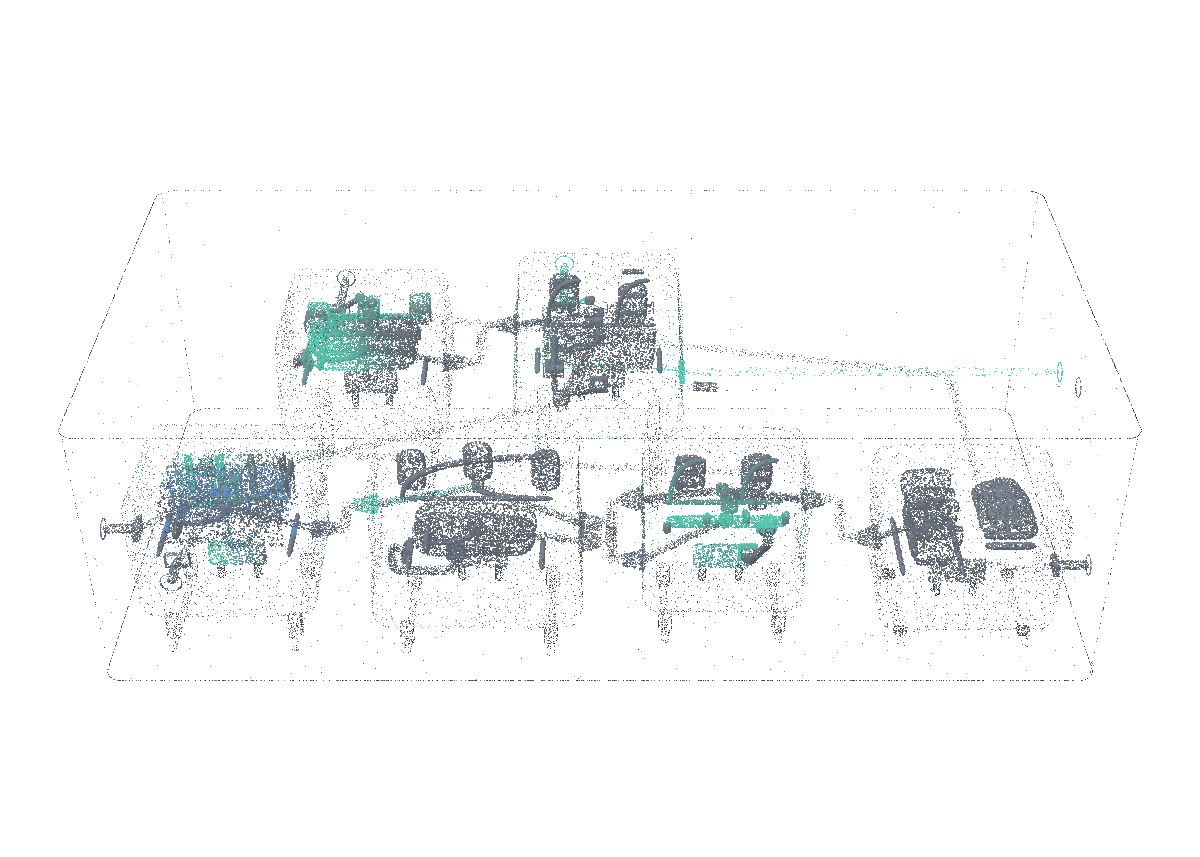
Independent teams and a common record. An illustrative organization of shared purpose, challenge, bounded delivery and useful handover; software is optional.
Loading model
Technical descriptionsInteractive model unavailable. The static illustration and descriptions remain available.
Shared purpose and mandate register
Retain outcomes, finite resources and the decisions reserved elsewhere.
Technical data

Inputs

Actual agreed scope/resources and reserved decisions.

Actual scoped decision making the revised mandate effective.

Transformation

Retain outcomes, finite resources and the decisions reserved elsewhere.

Retained state and outputs

Agreed objective and acceptance basis.

Active mandate, pending proposal and prior versions remain distinct.

Constraints

A pending proposal neither expands nor disables unrelated work under the current effective mandate.

Sensing and evidence commons
Make changed dependencies and relevant lessons inspectable.
Technical data

Inputs

Actual dependency change and evidence.

Attributed experience available to future deliberation.

Transformation

Make changed dependencies and relevant lessons inspectable.

Retained state and outputs

Independent changed dependency and its source.

Decisions, observations and useful failures.

Constraints

Changed dependencies and lessons retain their actual source.

Deliberation and challenge space
Compare proposals, consequences and objections from affected teams.
Technical data

Inputs

Relevant changed evidence and consequences.

Explicit expanded-scope proposal with resource/consequence basis.

Objection and bounded alternative.

Current mandate and the agreed decision-right holder.

Transformation

Compare proposals, consequences and objections from affected teams.

Retained state and outputs

Proposed expanded scope and bounded alternative.

Unresolved objections and the existing decision right.

Constraints

Unresolved disagreement remains visible until the existing decision holder supplies a decision.

Bounded delivery cells
Let teams perform inspectable work within the effective mandate.
Technical data

Inputs

Effective bounded mandate and acceptance criteria.

Specific finding requiring correction under the same work context.

Transformation

Let teams perform inspectable work within the effective mandate.

Retained state and outputs

Independent responsibilities and bounded resource basis.

Actual team artifacts and incomplete work remain separate.

Constraints

Teams work within the selected effective mandate and resource basis.

Review and correction
Compare identified work against the agreed criteria and return specific findings.
Technical data

Inputs

Identified team artifacts and actual evidence.

Original agreed criteria and effective scope.

Transformation

Compare identified work against the agreed criteria and return specific findings.

Retained state and outputs

Evidence and acceptance criteria.

Unresolved finding tied to the same work item.

Constraints

Findings refer to the identified work and agreed criteria.

Stewardship and handover commons
Make results, failures and open questions usable by another team.
Technical data

Inputs

Reviewed result, useful failures and unresolved questions.

Transformation

Make results, failures and open questions usable by another team.

Retained state and outputs

Accepted artifact, evidence and responsibility.

Useful failures, unresolved questions and next-team context.

Constraints

Handover carries unresolved questions and responsibility; it does not transfer governing power by itself.

An illustrative organization of shared purpose, challenge, bounded delivery and useful handover; software is optional.

Additional mechanisms are described in the technical reference.

Develop the organization as carefully as the technology.

We are building a lab where specialized people and systems can work toward a shared purpose while retaining their independence.

Knowledge should travel. Responsibility should be clear. A useful system should make it easier for the next person to build on what came before.

Our research extends to the organization itself: how a team remembers, notices what matters, makes decisions and hands over work. People determine purpose and authority; software can make their coordination more inspectable.

A lab is a collective practice.

Research, engineering, design and the way we organize belong in the same conversation. Meet the people building Naevum.

  • Theo Georgiev
  • Hris Dimitrov
  • Stan Sarbinski
  • Lyubo Boyhinov
  • Yo Dimitrov
  • Steph Angelov

Give each essential function a working structure.

We call these functions organizational organs.

Sensing and memory

Notice changes and retain the evidence, decisions and lessons that make them intelligible.

Deliberation and responsibility

Create places to examine alternatives, disagree and assign a bounded mandate.

Delivery and review

Make work visible, judge the result and preserve a path to correction.

Learning and continuity

Turn useful experience into shared knowledge that can survive a handover.

A team can act with a clear mandate.

A bounded team receives a purpose, the authority to carry it out and a way to account for the result.

  1. Agree the responsibility

    Define the outcome, resources and decisions that stay with others.

  2. Make the work inspectable

    Retain decisions, evidence and unresolved questions as the work proceeds.

  3. Return knowledge

    Share the accepted result and useful failures so another team can continue from them.

Help other structures take shape.

We want to share adaptable models for horizontal organization and support creation and adoption programs.

  1. Map the current organization

    Understand responsibilities, knowledge flows and the decisions people repeatedly struggle to make.

  2. Design a bounded pilot

    Choose organs and mandates appropriate to the people, work and legal setting.

  3. Evaluate and adapt

    Observe the result, revise the model and document what another organization could reuse.

A disagreement should change the mandate visibly.

Proposed adoption-pilot example: a delivery team asks to expand a mandate because a shared dependency has changed.

Proposal and challenge

The initiating team records the proposed scope, resources and consequence. The team responsible for the affected dependency can challenge the assumptions and suggest a bounded alternative.

Recorded decision

The person or group holding the agreed decision right resolves the scoped question. The revised mandate becomes effective through that recorded decision; the earlier version and unresolved objections remain inspectable.

This is a worked program proposal. Each organization agrees its own decision rights, stewardship and conflict-resolution process in its actual legal and operating setting.

Partners

A few useful questions.

Is there one Naevum governance model everyone must adopt?

The mission is to develop and share adaptable models. An organization’s people, work and legal setting determine how a model should be designed and tested.

Who is this invitation for?

People commissioning intelligent systems, researchers, builders and organizations interested in a practical program for horizontal coordination.

Within the Naevum ecosystem.

Connected system

Institutional memory

Software supporting knowledge and attention.

Connected system

Organization context

Domain work, responsibility and shared methods.

Delivery system

Practical delivery

Turn a defined purpose into inspectable work.

Technical reference2 further sections

Give each essential function a working structure.

Sensing and memory. Notice changes and retain the evidence, decisions and lessons that make them intelligible.

Deliberation and responsibility. Create places to examine alternatives, disagree and assign a bounded mandate.

Delivery and review. Make work visible, judge the result and preserve a path to correction.

Learning and continuity. Turn useful experience into shared knowledge that can survive a handover.

A team can act with a clear mandate.

Agree the responsibility. Define the outcome, resources and decisions that stay with others.

Make the work inspectable. Retain decisions, evidence and unresolved questions as the work proceeds.

Return knowledge. Share the accepted result and useful failures so another team can continue from them.

What could these mechanisms make possible for you?

Build with Naevum