
Data & infrastructure

Plan capacity from the physical world up.

Data & infrastructure is Metahive's compute layer for organizations sizing AI workloads, so that they know where their work runs, who operates it and what energy it draws.

  • Data center planners
  • EU compute sites
  • Energy accounting
  • Confidential compute
Discuss infrastructure requirements
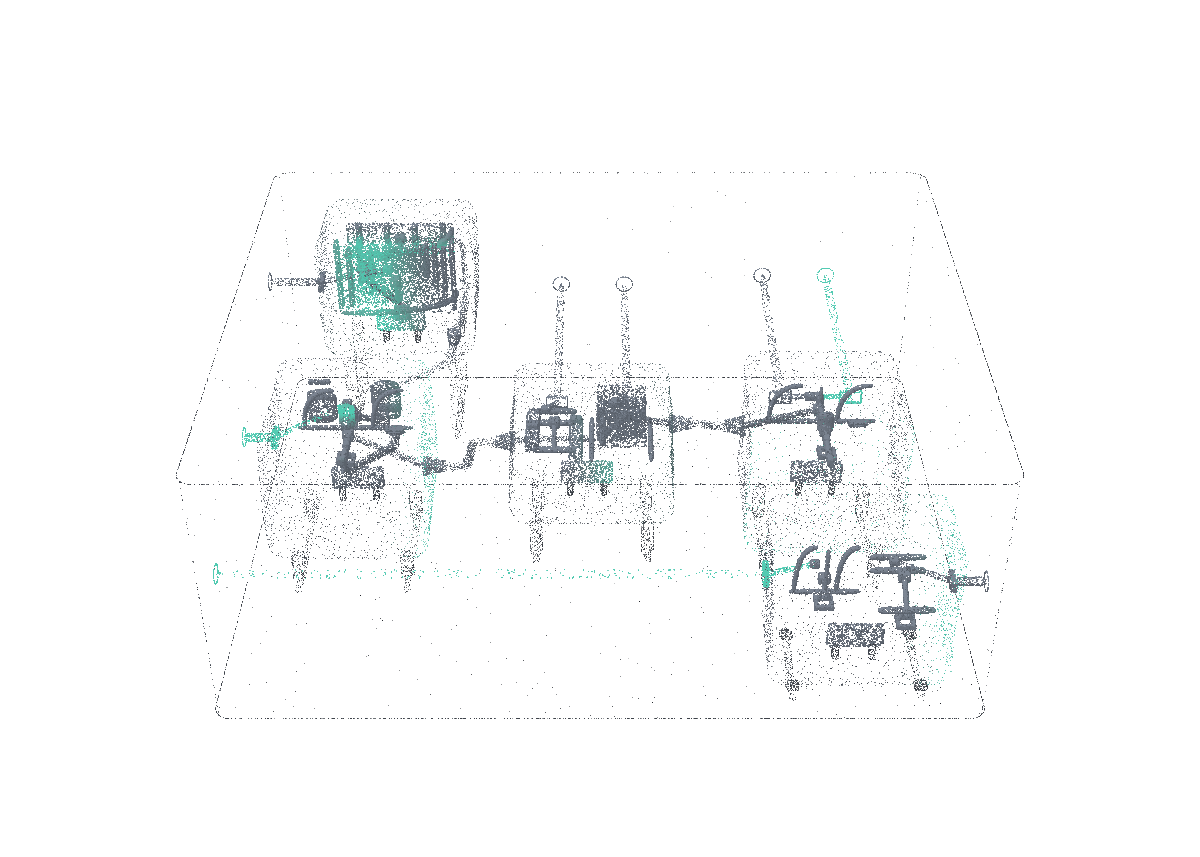
Workload placement and site-hour accounting. An illustrative process for comparing site constraints and reconciling identified resource use.
Loading model
Technical descriptionsInteractive model unavailable. The static illustration and descriptions remain available.
Site and service model
Combine compute, power, cooling, network and operating responsibilities into a candidate envelope.
Technical data

Inputs

Physical and operator prerequisites.

Transformation

Combine compute, power, cooling, network and operating responsibilities into a candidate envelope.

Retained state and outputs

Location, tenancy and physical prerequisites.

Planned design remains distinct from commissioned capacity.

Constraints

Planned design capacity remains separate from commissioned service capacity.

Workload and custody matcher
Compare required resources and sensitivity with an eligible service boundary.
Technical data

Inputs

Candidate service capacity and custody boundary.

Declared resource needs and sensitivity.

Transformation

Compare required resources and sensitivity with an eligible service boundary.

Retained state and outputs

Workload, custody, site and capacity requirements.

Eligible site or explicit mismatch.

Constraints

Custody, resource and site requirements must all fit the proposed placement.

Reservation and operation register
Bind maximum admitted cost before work under one identity.
Technical data

Inputs

Eligible identified placement.

Applicable tenant/site/period maximum and policy.

Same-identity settlement or retained uncertainty.

Transformation

Bind maximum admitted cost before work under one identity.

Retained state and outputs

Tenant/site/period and money/token maximum.

Policy identity and unresolved reservation state.

Constraints

The reservation binds a maximum cost to the original tenant, site and period.

Service-use reconciliation
Compare scheduler/service evidence and settle the original reservation.
Technical data

Inputs

Original reservation for later settlement.

Independent identified work record.

Actual consumption/result or explicit unknown usage.

Transformation

Compare scheduler/service evidence and settle the original reservation.

Retained state and outputs

Tenant, product, unit, time and observed use.

Actual cost, justified unused balance or uncertainty.

Constraints

Uncertain use does not automatically release the unused reservation.

Meter and allocation workbench
Attribute site-hour metering using matching IT use without hiding idle energy.
Technical data

Inputs

Independent site/hour metered energy including overhead.

Observed tenant/site/hour IT use.

Transformation

Attribute site-hour metering using matching IT use without hiding idle energy.

Retained state and outputs

Meter and tenant IT-use records for the same site/hour.

Facility overhead, allocated energy and explicit unattributed remainder.

Constraints

Attribution requires matching site and hour records; idle or unattributed energy stays visible.

An illustrative process for comparing site constraints and reconciling identified resource use.

Additional mechanisms are described in the technical reference.

What the research says

More compute is coming; each workload needs a place

68 TWh1
EU data center electricity use in 2024, with a further rise projected by 2030
Triple2
The EU's stated aim for its data center capacity over the next five to seven years
40%3
Yearly gain in machine-learning hardware energy efficiency, as hardware costs fell

EU data centers already draw a large share of electricity and the EU aims to triple capacity, while each hardware generation does more per watt. Placement stays the buyer's decision, so Metahive Builder tests a site against the workload before purchase and Metahive books each workload's energy apart from overhead.

Capacity is useful only in an operating context.

Compute procurement, a new site and a private deployment begin with different constraints.

Compute buyer

Define workload, service units, location and operational responsibilities.

Site planner

Compare fit, power, cooling, network and physical capacity.

Institution

Connect custody, model access and operating control to a deployment design.

Compare the site and the workload together.

A larger equipment list can still fail the intended service.

  1. Model the physical system

    Follow equipment through the rack, room, building and plot.

  2. Model the workload

    Check inference memory, placement, concurrency and compute limits.

  3. Examine operation

    Compare energy and capacity scenarios with declared assumptions, then plan the measurements required at deployment.

Can the workload grow inside our energy commitment?

A chief sustainability officer decides when to move a growing AI workload; the plan shows the limit and how sure the estimate is. Illustrative.

  1. 1 of 4An inference workload grows as more teams use it, and the energy account books its use apart from site overhead.
  2. 2 of 4A Builder scenario projects the workload's draw on its current placement and draws the uncertainty around the estimate.
  3. 3 of 4A window opens before the projected draw crosses the energy commitment, showing what moving early costs at each point.
  4. 4 of 4The chief sustainability officer chooses when to move the workload, and the measured outcome corrects the next scenario.Decision: When to move the workload, and where.
Select any part of the drawingScroll to step · Esc to skipFig. 1
  1. 1 of 4A planned expansion adds racks to an existing site, and the Builder scenario follows their power and heat.
  2. 2 of 4Cooling at the site has not been measured under this load, so the uncertainty band around the projected draw is wide.
  3. 3 of 4A window opens before the site power limit, and the scenario shows that power runs out before space does.
  4. 4 of 4The chief sustainability officer splits the placement: part of the workload moves to the managed bridge, and its energy is booked separately.Decision: Expand the site, or split the workload.
Select any part of the drawingScroll to step · Esc to skipFig. 1

Systems behind it

What Data & infrastructure is built from.

Questions about Data & infrastructure.

Can we start with feasibility only?

Yes. A bounded engagement can deliver a source-linked configuration, workload scenarios, critical constraints and the evidence needed for an investment or build decision.

Data & infrastructure in the stack.

Deployment option

Compute and infrastructure

Service, site and operating responsibilities.

Works with

Planning and scenarios

Physical, energy and inference constraints.

Works with

AI deployment boundaries

Context, model access and effects.

Technical reference3 further sections

Capacity is useful only in an operating context.

Compute buyer. Define workload, service units, location and operational responsibilities.

Site planner. Compare fit, power, cooling, network and physical capacity.

Institution. Connect custody, model access and operating control to a deployment design.

Compare the site and the workload together.

Model the physical system. Follow equipment through the rack, room, building and plot.

Model the workload. Check inference memory, placement, concurrency and compute limits.

Examine operation. Compare energy and capacity scenarios with declared assumptions, then plan the measurements required at deployment.

System story

From a device to a useful compute site

A proposed compute-site scenario showing the relationship between equipment, energy and inference.

Follow the story

Where should your next AI workload run, and who should be able to say what energy it draws?

Discuss infrastructure requirements