
Metahive

Research, compute and the first tier.

Metahive is the research, compute and Tier 1 line of Naevum Labs for organizations and hosts, so that a team’s folders become a working environment on infrastructure it can name.

  • Infrastructure
  • Tier 1 · Included
  • EU compute sites
  • Energy accounting
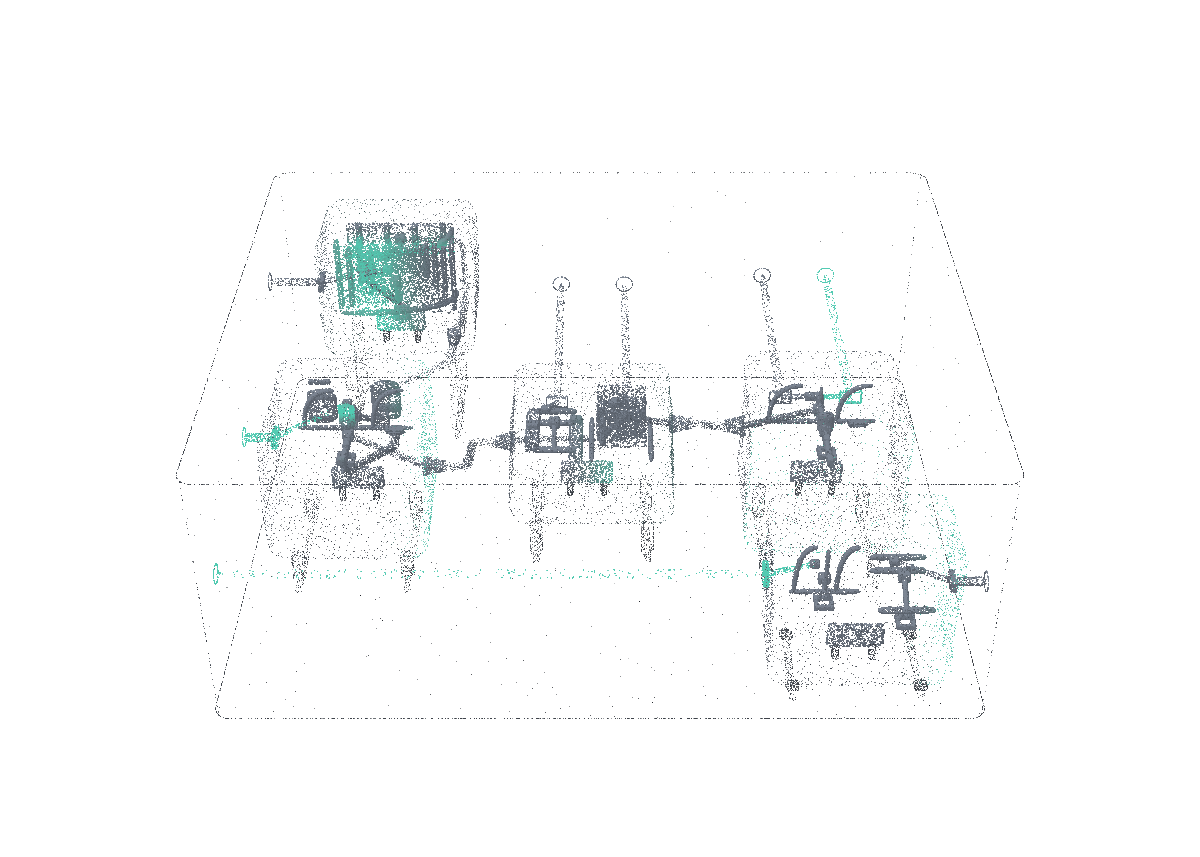
Workload placement and site-hour accounting. An illustrative process for comparing site constraints and reconciling identified resource use.
Loading model
Technical descriptionsInteractive model unavailable. The static illustration and descriptions remain available.
Site and service model
Combine compute, power, cooling, network and operating responsibilities into a candidate envelope.
Technical data

Inputs

Physical and operator prerequisites.

Transformation

Combine compute, power, cooling, network and operating responsibilities into a candidate envelope.

Retained state and outputs

Location, tenancy and physical prerequisites.

Planned design remains distinct from commissioned capacity.

Constraints

Planned design capacity remains separate from commissioned service capacity.

Workload and custody matcher
Compare required resources and sensitivity with an eligible service boundary.
Technical data

Inputs

Candidate service capacity and custody boundary.

Declared resource needs and sensitivity.

Transformation

Compare required resources and sensitivity with an eligible service boundary.

Retained state and outputs

Workload, custody, site and capacity requirements.

Eligible site or explicit mismatch.

Constraints

Custody, resource and site requirements must all fit the proposed placement.

Reservation and operation register
Bind maximum admitted cost before work under one identity.
Technical data

Inputs

Eligible identified placement.

Applicable tenant/site/period maximum and policy.

Same-identity settlement or retained uncertainty.

Transformation

Bind maximum admitted cost before work under one identity.

Retained state and outputs

Tenant/site/period and money/token maximum.

Policy identity and unresolved reservation state.

Constraints

The reservation binds a maximum cost to the original tenant, site and period.

Service-use reconciliation
Compare scheduler/service evidence and settle the original reservation.
Technical data

Inputs

Original reservation for later settlement.

Independent identified work record.

Actual consumption/result or explicit unknown usage.

Transformation

Compare scheduler/service evidence and settle the original reservation.

Retained state and outputs

Tenant, product, unit, time and observed use.

Actual cost, justified unused balance or uncertainty.

Constraints

Uncertain use does not automatically release the unused reservation.

Meter and allocation workbench
Attribute site-hour metering using matching IT use without hiding idle energy.
Technical data

Inputs

Independent site/hour metered energy including overhead.

Observed tenant/site/hour IT use.

Transformation

Attribute site-hour metering using matching IT use without hiding idle energy.

Retained state and outputs

Meter and tenant IT-use records for the same site/hour.

Facility overhead, allocated energy and explicit unattributed remainder.

Constraints

Attribution requires matching site and hour records; idle or unattributed energy stays visible.

An illustrative process for comparing site constraints and reconciling identified resource use.

Additional mechanisms are described in the technical reference.

Site capacity and custody requirements guide workload placement. A reservation bounds the admitted cost; service records and site-hour metering account for use and idle energy.

Useful compute. A clear place in the world.

Discuss compute or hosting

What the research says

Data-center electricity is on course to double.

The IEA expects data-center electricity use to roughly double by 2030, with AI-focused sites growing fastest. Every new site will be asked what it draws and for whom. Metahive answers with an energy account that keeps the workload’s use, the site’s overhead and idle consumption apart.

Research with a physical goal.

Metahive has a research track prepared for European funding.

What survives testing goes into the Vault, Naevum’s method and component atlas, with what it assumes and what proved it, before it becomes an organ or a program.

Sites, a bridge and a network of hosts.

Metahive designs container micro data centers, starts on rented EU servers, and operates sealed units that hosts own. A workload keeps one identity from reservation to energy account.

Idle consumption stays in the site’s energy account instead of disappearing from a workload-only total. Placement, custody and energy answer three different questions: where work runs, which boundary holds its data, and how measured site energy is assigned.

Container sites

Micro data centers in standard containers, planned with Metahive Builder. The sites are in development.

Managed bridge

Rented EU servers that Metahive operates carry the first workloads while the sites are built.

Host units

Standard sealed units that hosts own and Metahive operates. Idle capacity is sold as preemptible work.

Trust tiers

Standard for ordinary data. Custody runs on confidential-computing hardware behind a private endpoint per customer, with open-weight models first.

Reserve before dispatch

Before a job starts, Metahive reserves the most it may cost against the customer’s and the site’s budgets.

Settle against the result

When the job ends, its usage (customer, product, unit and time) is reconciled with the scheduler’s and the service’s own records.

Explain the energy

Hourly site metering and each customer’s IT use support a stated allocation method. Allocated or estimated energy is labeled as such.

Where should this workload run?

An infrastructure buyer chooses the trust tier; placement and the energy account follow from it. Illustrative.

  1. 1 of 4An infrastructure buyer declares an inference workload and how sensitive its data is. Here the documents are public product manuals.Decision: How sensitive is this workload’s data?
  2. 2 of 4Public data fits the Standard trust tier, so the buyer chooses it. Custody, on confidential-computing hardware, is kept for data that must stay sealed.Decision: Standard or Custody.
  3. 3 of 4The workload runs on the managed bridge, on rented EU servers that Metahive operates. Metahive’s own sites are in development and take work later.
  4. 4 of 4The energy account books the workload’s own use, the site’s cooling and other overhead, and idle consumption as three separate entries.
Select any part of the drawingScroll to step · Esc to skipFig. 2
  1. 1 of 4A hospital group declares a summarization workload over discharge notes. The data is personal and must stay sealed while it is processed.Decision: Which data may leave the hospital at all?
  2. 2 of 4The buyer chooses the Custody tier: the work runs on confidential-computing hardware, behind a private endpoint for this one customer.Decision: Standard or Custody.
  3. 3 of 4The endpoint serves an open-weight model the hospital can name, inside the confidential GPU, so the notes are protected while they are in use.
  4. 4 of 4Energy is accounted the same way as for any workload: its own use, the site’s overhead and idle consumption, each as a separate entry.
Select any part of the drawingScroll to step · Esc to skipFig. 2
  1. 1 of 4A regional business with space and power buys a standard sealed unit and becomes a host.Decision: Whether to host a unit.
  2. 2 of 4Metahive operates the unit: its software, its security and the workloads it runs. The host provides the place, the power and the connection.
  3. 3 of 4Idle hours on the unit are sold as preemptible capacity. When a priority workload arrives, the preemptible work makes way.
  4. 4 of 4The unit’s energy account separates workload use, site overhead and idle hours, so the host can see what ran on its premises.
Select any part of the drawingScroll to step · Esc to skipFig. 2

Inside the mechanism. A workload has a place and an energy account.

Illustrative scenario. A sensitive institutional workload is evaluated against tenancy, custody and physical resource constraints.

Select a site only after the context boundary is defined.

Available compute does not by itself establish an admissible place for the work.

Request
A workload with declared resources and sensitivity.
Custody
The selected tenancy and observation boundary.
Admission
Reserve the admitted operation and cost before dispatch.
Placement
Choose an eligible physical execution site.

Keep workload use, facility overhead and idle energy distinct.

Energy attribution follows the tenant, site and hour. Uncertainty in a returned result remains visible until reconciled.

IT use
Attribute the workload’s observed resource consumption.
Facility overhead
Retain cooling and other site requirements in the account.
Idle energy
Keep unattributed consumption explicit under the selected allocation method.
Settlement
Reconcile observed work and the original reservation under the same identity.

Where it changes the work.

Illustrative situations, connected to the mechanisms that make them possible.

Bring a workload into a compute service

Enterprises and research institutions

A workload needs the right capacity, data boundary and result criteria.

How it works
Admission binds a task contract to eligible resources and a workload-specific verifier.
What changes
The service can account for accepted useful work rather than equating resource time with a correct result.

Connect several physical sites

Infrastructure operators

Distributed capacity has different energy, equipment and operating conditions.

How it works
Site constraints, fenced attempts and common job records connect each contribution to its origin.
What changes
Operators can investigate where work ran and how its result was accepted.

Plan capacity around real demand

Institutional compute buyers

A hardware list says little about the inference workload the institution needs.

How it works
Workload and facility models connect memory, throughput, power and cooling.
What changes
Procurement discussions can expose the physical assumptions behind the proposed service.
Explore the connected system

The tier every client starts with.

Tier 1 is included with the stack. An organization shares its folders and gets a working environment; the full list of capabilities and their states is on the platform page.

  1. Share a folder

    Point Metahive at the folders you already have. It reads the text files and records the path and date of each one. PDF and Office files are in development.

  2. Ask the knowledge base

    A knowledge base and a memory are built from the index, and every answer leads back to its files.

  3. Approve the programs

    Metahive proposes programs, skills and workflows. A person approves each one before it is installed.

  4. Connect your agent tools

    Command-line coding agents connect through one governed gateway. Connectors for the Claude app, the ChatGPT app and VS Code are in development.

  5. Check the record

    Every consequential action lands in a hash-chained, Merkle-anchored, timestamped record that you can verify.

Questions about Metahive.

Can we request capacity or discuss hosting?

Yes. Describe the workload or site and the location, custody and operating requirements. The discussion establishes what service or development scope is available.

Is Builder a running data center?

Builder models proposed configurations and operating scenarios. It supports planning; a site’s construction, commissioning and service operation are separate stages.

Metahive in the stack.

Works with

Plan the physical system

Explore equipment, capacity and energy before commitment.

Connected system

Design the AI boundary

Combine infrastructure choices with context and effect controls.

Technical reference5 mechanisms · 2 further sections

The mechanisms underneath.

The technical choices that give Metahive its particular behavior.

Admission before workload
Tenant and site budgets reserve the maximum admitted cost before dispatch and settle against the observed result.
Usage with an identity
Tenant, product, unit and time connect usage to the delivered service. Reconciliation examines scheduler and service records.
An explicit energy allocation
Hourly metered site energy and tenant IT use support an allocation method. Estimates and allocations remain labeled as such.
Deployment tiers with prerequisites
Dedicated endpoints, managed capacity and stronger custody designs have different physical and operating requirements.
Site and network as distinct scopes
Hardware, energy, hosting and the distributed platform retain their own design and delivery responsibilities.

Start with the service you need.

Metahive connects compute services to the sites and resources that support them. Workload admission, usage identity, energy attribution and operating responsibility give capacity a concrete setting.

Run a workload. Specify the workload, required capacity, location and service responsibilities. Agree the delivery scope around those requirements.

Develop a site. Examine equipment, power, cooling, network and host participation before treating a location as available capacity.

Design a dedicated environment. Connect deployment and custody requirements to the infrastructure and people who will operate it.

A workload has a resource history.

Admission, usage and settlement need to describe the same service.

Reserve before dispatch. Tenant and site budgets reserve the maximum admitted cost before work begins.

Settle against the result. Usage retains tenant, product, unit and time. Reconciliation compares records with scheduler and service evidence.

Explain the energy. Hourly site metering and tenant IT use can support an explicit allocation method. Allocated or estimated energy is labeled accordingly.

System story

From a device to a useful compute site

A proposed compute-site scenario showing the relationship between equipment, energy and inference.

Follow the story

Where should your next workload run?

Discuss compute or hosting