Enterprise & institutions

Give knowledge continuity and authority.

Enterprise & institutions is Naevum's Tier 3 stack for organizations that must explain their decisions, so that every answer shows the rule, the date and the person behind it.

  • Enterprises & institutions
  • Time-aware memory
  • Source & authority
  • Evidence record
Discuss an institutional system
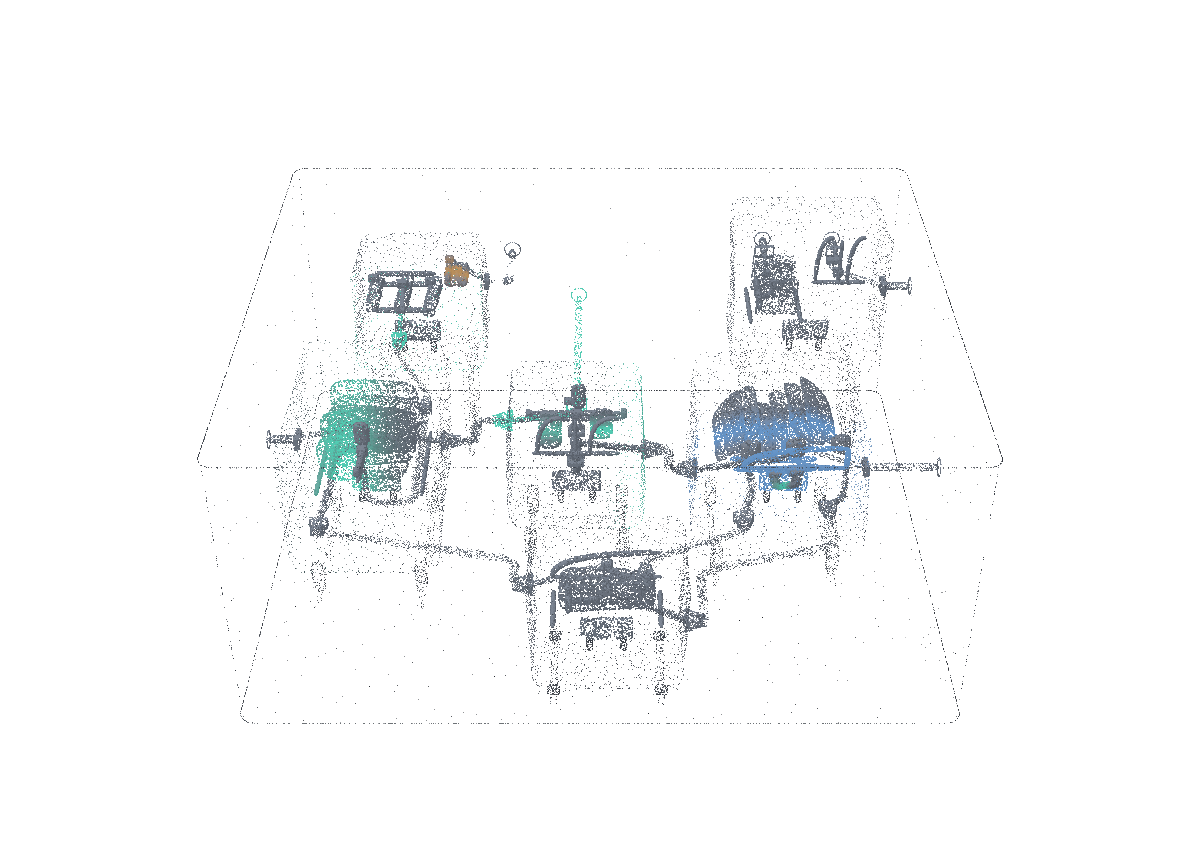
Temporal archive and bounded recall. An illustrative process for source-grounded recall, attention and outcome comparison.
Loading model
Technical descriptionsInteractive model unavailable. The static illustration and descriptions remain available.
Evidence registration
Append source-connected claims, episodes, lessons and measured failures as distinct records.
Technical data

Inputs

Attributed original or revised commitment.

Transformation

Append source-connected claims, episodes, lessons and measured failures as distinct records.

Retained state and outputs

Source, holder, observation time and record identity.

Supersession, contest and retraction retain the earlier record.

Constraints

Revision, contest and retraction preserve the earlier source history.

Temporal interpretation
Resolve validity, knowledge time, scope and conflicting authority for the requested question.
Technical data

Inputs

Scope, validity time and knowledge cutoff.

Claims and operations with source ancestry.

Transformation

Resolve validity, knowledge time, scope and conflicting authority for the requested question.

Retained state and outputs

Event validity and recorded-at cutoff.

Authority ancestry and unresolved conflicting claims.

Constraints

Both the validity question and the knowledge cutoff govern which records apply.

Bounded recall workbench
Find relevant evidence and assemble a bounded source-bearing answer.
Technical data

Inputs

Applicable, contested or unavailable evidence.

Rebuilt index/packs and retained failure context.

Transformation

Find relevant evidence and assemble a bounded source-bearing answer.

Retained state and outputs

Canonical records remain the historical basis.

Item/byte bounds, source pointers and abstention reasons.

Constraints

The answer stays within the selected scope and may abstain when evidence is inadequate.

Accumulated attention
Integrate eligible change, retain standing causes and distinguish blindness from resolution.
Technical data

Inputs

Eligible changed source, freshness and provenance.

Transformation

Integrate eligible change, retain standing causes and distinguish blindness from resolution.

Retained state and outputs

Charge, surprise, decay and evidence trust.

New, standing, stale and cleared states.

Constraints

Stale or missing sensing does not clear a standing issue.

Outcome and selection advice
Compare a stored estimate with a later identified outcome and retain uncertainty.
Technical data

Inputs

Defined target and context known before execution.

Independent outcome under the stored task identity.

Transformation

Compare a stored estimate with a later identified outcome and retain uncertainty.

Retained state and outputs

Defined target, task identity and resource estimate.

Independent outcome, unknown endings and eligible-choice advice.

Constraints

Outcome advice remains separate from permission to act.

Maintenance and evaluation
Rebuild derived context and retain useful failures without replacing source history.
Technical data

Inputs

Canonical records and their integrity state.

Attributed retrieval use, not proof of future utility.

Transformation

Rebuild derived context and retain useful failures without replacing source history.

Retained state and outputs

Duplicate/conflict annotations and derived packs.

Measured harms and reasons for caution or release.

Constraints

Derived indexes can be rebuilt while canonical history remains intact.

An illustrative process for source-grounded recall, attention and outcome comparison.

Additional mechanisms are described in the technical reference.

What the research says

An institution owes the reasons, not just the result

Art. 86(1)1
A person affected by certain high-risk AI decisions may ask for a clear explanation
€2.75M2
Dutch fine on the tax authority for discriminatory flagging in childcare benefits
30%3
Accuracy drop when chat assistants must recall facts across long interactions

The AI Act gives people affected by certain high-risk decisions a right to an explanation, and the Dutch fine shows what an unexplained risk rule costs an institution. Assistants also lose recall over long interactions, so Vagus keeps each decision with its date, authority and sources, and the explanation is read from the record.

Recover the reason, not just the document.

An institution asks why a commitment changed, which policy applied then and who owns the next decision.

A source-connected memory can retain current and historical claims, disagreements and the evidence behind them. An attention layer can surface new conditions that make an earlier decision worth revisiting.

Design the responsibility around the knowledge.

Useful institutional intelligence depends on roles, custody and the actual workflow.

Map access

Specify who may see which sources and how current those sources need to be.

Scope model context

Select the context needed for a task and account for its destination and history.

Return an accountable answer

Present the evidence, uncertainty and permitted next action to the responsible person.

Does last year's permit decision still stand?

An agency director decides whether to reopen a decision after its rule changed; memory supplies what was true then and what changed since. Illustrative.

  1. 1 of 5The agency grants a permit, and memory keeps the decision with its date, the official who signed it and the noise rule it rested on.
  2. 2 of 5The following year the noise rule is revised.
  3. 3 of 5Memory sees that the revision touches the basis of the permit and flags it to the director responsible.
  4. 4 of 5The director asks for the decision as it stood: the permit, its official and the rule in force on the day it was signed.
  5. 5 of 5The revised rule appears beside the old one, marked as newer, and the director decides what happens to the permit.Decision: Reopen the permit, or record why it stands.
Select any part of the drawingScroll to step · Esc to skipFig. 1
  1. 1 of 4A citizen asks the agency why their application was refused, and the request names that decision.
  2. 2 of 4Memory returns the refusal with its date, the official who signed it and the rule in force that day.
  3. 3 of 4A caseworker drafts the reply with an outside model; the boundary sends the decision and the rule, and the applicant's personal file stays inside.
  4. 4 of 4The director reviews the reply against its sources and signs it, and the reply is recorded with the decision.Decision: The director signs the reply or asks for changes.
Select any part of the drawingScroll to step · Esc to skipFig. 1

Systems behind it

What Enterprise & institutions is built from.

Questions about Enterprise & institutions.

How is value evaluated?

Start with recurring institutional questions and decisions. Test correct source retrieval, temporal accuracy, useful attention and successful completion of the intended workflow.

Enterprise & institutions in the stack.

Works with

Temporal institutional memory

Claims, attention and outcome context.

Works with

Sensitive model workflows

Source, observer and effect boundaries.

Built on

Organization workspace

Roles and domain-specific processes.

Technical reference2 further sections

Design the responsibility around the knowledge.

Map access. Specify who may see which sources and how current those sources need to be.

Scope model context. Select the context needed for a task and account for its destination and history.

Return an accountable answer. Present the evidence, uncertainty and permitted next action to the responsible person.

System story

From private knowledge to institutional intelligence

An illustrative institutional question that needs both history and controlled model context.

Follow the story

Which decision would your institution struggle to explain if the person it affected asked tomorrow?

Discuss an institutional system