Personal & industrial autonomy

Make the work continue responsibly.

Personal & industrial autonomy is Manna's continuing work for individuals and plant teams, so that work moves inside limits they set and waits for them where the mandate ends.

  • Personal & industrial
  • Level 4–5 autonomy
  • Admitted actions
  • Recovery by design
Scope a persistent agent
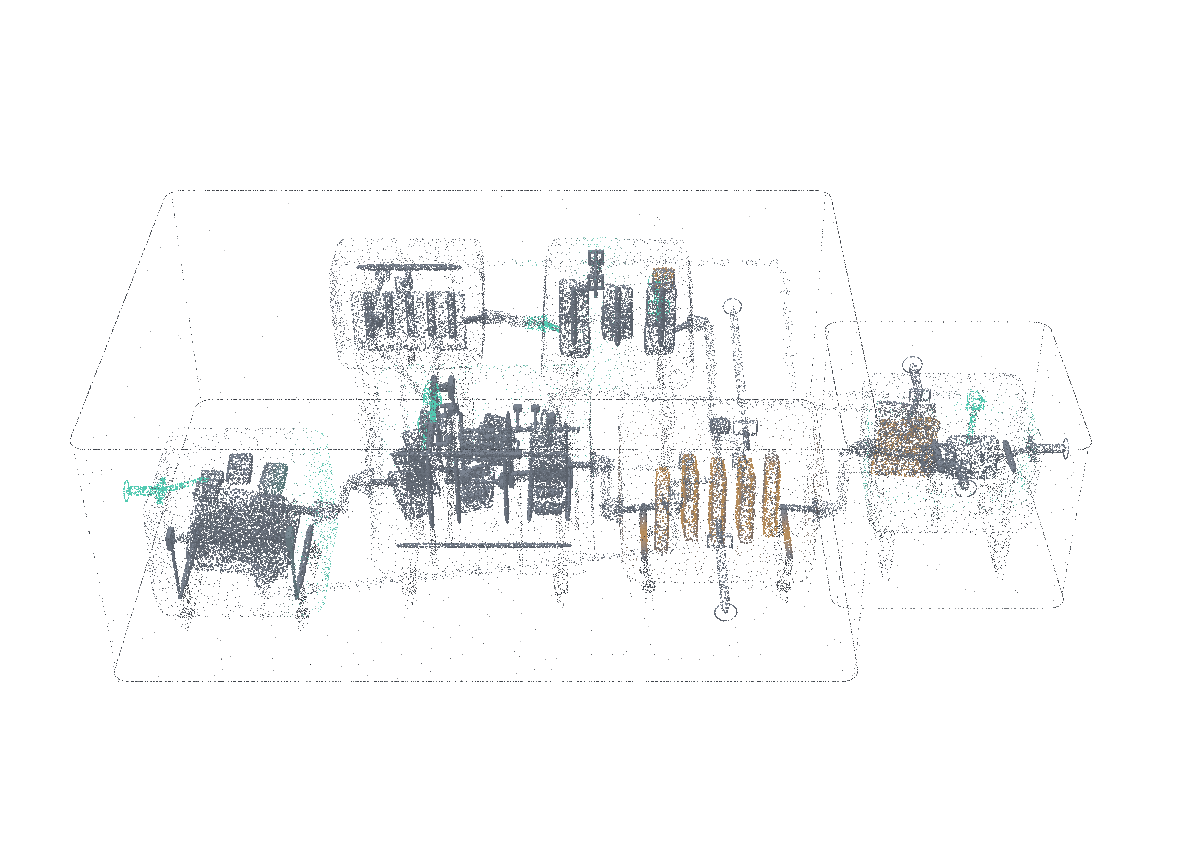
Source-led productive work machine. An illustrative continuing-work process.
Loading model
Technical descriptionsInteractive model unavailable. The static illustration and descriptions remain available.
Purpose and progress
Compare observed progress with a retained objective without equating a completed operation with objective achievement.
Technical data

Inputs

Recorded progress, distinct from objective achievement.

Transformation

Compare observed progress with a retained objective without equating a completed operation with objective achievement.

Retained state and outputs

Declared objective and envelope remain fixed until an explicit revision.

Observed progress is retained separately from the objective and its evaluation horizon.

Constraints

A completed operation is evidence of progress; the continuing objective still needs its own evaluation.

Evidence and contextual memory
Align selected sources with retained context, validity and unresolved gaps.
Technical data

Inputs

Identified observation with source/event time and validity.

Retained reviewed material and outline, not a new source observation.

Transformation

Align selected sources with retained context, validity and unresolved gaps.

Retained state and outputs

Source cursor, event time and applicability.

Reviewed source records and outline remain visible.

Quiet, absent, stale and retracted evidence remain distinct.

Constraints

Quiet, missing, stale and retracted evidence have different meanings.

Attention and condition regulation
Allocate finite work and pacing from purpose, known resource condition and retained faults.
Technical data

Inputs

Known resource readings or explicit unknown channels.

Declared priorities and due-work scope.

Fault/progress evidence; pending approval is not a fault.

Transformation

Allocate finite work and pacing from purpose, known resource condition and retained faults.

Retained state and outputs

Unknown resource channels remain unknown.

Eligible work allocation and protected-obligation scope.

Repeated body faults differ from waiting for a person.

Constraints

Unknown resource conditions stay unknown, and protected obligations remain within their declared scope.

Specialised workbench
Transform source material and retained context into a useful revised artifact.
Technical data

Inputs

The specific research question and declared flow.

Eligible source/context bundle with provenance.

Admitted finite work and pacing; pressure does not expand authority.

Transformation

Transform source material and retained context into a useful revised artifact.

Retained state and outputs

Chosen evidence and its provenance.

The lighter analysis and remaining uncertainty.

Revised brief and unresolved question.

Constraints

The revised artifact retains its source basis and unresolved questions.

Bounded effect interface
Hold an identified external request, couple only its applicable grant, and issue one admitted action.
Technical data

Inputs

One external data request with stable identity.

Applicable scope and operating limits.

An independent grant naming the exact request.

Transformation

Hold an identified external request, couple only its applicable grant, and issue one admitted action.

Retained state and outputs

Exact request, target and scope.

Independent matching authority and envelope.

Original action identity; zero idle actuation.

Constraints

The exact request needs its applicable independent grant before the output can move.

Consequence and continuity
Retain work results, action records, independent evidence and unfinished obligations across continuation.
Technical data

Inputs

A revised local brief and remaining question.

The named admitted attempt; not proof of an observed consequence.

An identified receipt or retained uncertainty.

Later observed consequence, separately evaluated.

Transformation

Retain work results, action records, independent evidence and unfinished obligations across continuation.

Retained state and outputs

Expected effect, actual receipt and observed consequence remain distinct.

Causal ancestry, original pending action and earlier results.

Required state and behavioral continuity checks; replay alone is insufficient.

Constraints

An uncertain action keeps its original identity. A receipt and a later consequence remain separate evidence.

An illustrative continuing-work process.

Additional mechanisms are described in the technical reference.

What the research says

Working on every try is a different bar

Agents succeed less often when the same task must succeed every time, and people over-trust automation most when they are busy. Manna therefore works inside a written mandate, holds what lies outside it for a person, and records enough to recover after an interruption.

A personal project and an industrial process need different mandates.

Continuing work becomes useful when its authority fits the setting.

Personal

Carry an objective across sessions, observe relevant sources and prepare the next useful step for a person.

Industrial

Coordinate a process under specified equipment, resource, intervention and recovery responsibilities.

Make interruption part of the design.

A bounded autonomous workflow must retain enough state for a responsible continuation.

  1. State the objective

    Define success, resources and the permitted operating conditions.

  2. Separate observation and effect

    A changing signal can influence a proposal; action still follows the mandate.

  3. Recover deliberately

    Retain effect identity, outstanding obligations and the situations requiring human intervention.

How far may the line run on its own overnight?

A plant manager sets the overnight mandate; the process works inside it and holds anything outside it for a person. Illustrative, with a synthetic Plant 2.

  1. 1 of 5The plant manager sets the overnight mandate for Plant 2: the batch range, the materials the line may draw and the conditions that stop it.Decision: The plant manager sets the mandate.
  2. 2 of 5Line readings arrive, and each proposed next batch is checked against the mandate before the line acts.
  3. 3 of 5Inside the mandate the next batch runs, and the operating memory records what was decided and on which readings.
  4. 4 of 5A reading drifts outside the range. The proposed change waits for the morning shift.
  5. 5 of 5In the morning the plant manager reads the held change with the readings behind it and decides.Decision: Approve or refuse the held change.
Select any part of the drawingScroll to step · Esc to skipFig. 1
  1. 1 of 4A power dip stops Plant 2 in the middle of a batch.
  2. 2 of 4On restart, the effect record shows which steps completed, so none of them runs twice.
  3. 3 of 4One step's result is uncertain, so it waits for the plant manager with the readings from before the dip.Decision: Repeat, skip or inspect the uncertain step.
  4. 4 of 4With the manager's choice recorded, the line resumes inside the same mandate.
Select any part of the drawingScroll to step · Esc to skipFig. 1

Systems behind it

What Personal & industrial autonomy is built from.

Questions about Personal & industrial autonomy.

What should the first pilot cover?

One continuing task with known inputs, bounded actions, explicit stop conditions and a recovery exercise. Evaluate task outcomes and interventions before widening the mandate.

Personal & industrial autonomy in the stack.

Works with

Continuing agent architecture

Purpose, regulation and recovery.

Works with

Operational memory

Context and attention over time.

Works with

Bounded effects

Control external computation and recovery.

Technical reference3 further sections

A personal project and an industrial process need different mandates.

Personal. Carry an objective across sessions, observe relevant sources and prepare the next useful step for a person.

Industrial. Coordinate a process under specified equipment, resource, intervention and recovery responsibilities.

Make interruption part of the design.

State the objective. Define success, resources and the permitted operating conditions.

Separate observation and effect. A changing signal can influence a proposal; action still follows the mandate.

Recover deliberately. Retain effect identity, outstanding obligations and the situations requiring human intervention.

System story

From purpose to a continuing agent

An illustrative journey through a continuing research task.

Follow the story

Which process would you let run overnight if you knew where it would stop and wait for you?

Scope a continuing agent