Research & invention

Give a promising mechanism a rigorous next step.

Research & invention is Naevum's test-first research service for R&D teams with a promising idea, so that they learn whether its effect holds before they fund building it.

  • R&D teams
  • Research
  • Evidence grading
  • Invention
Discuss a research problem
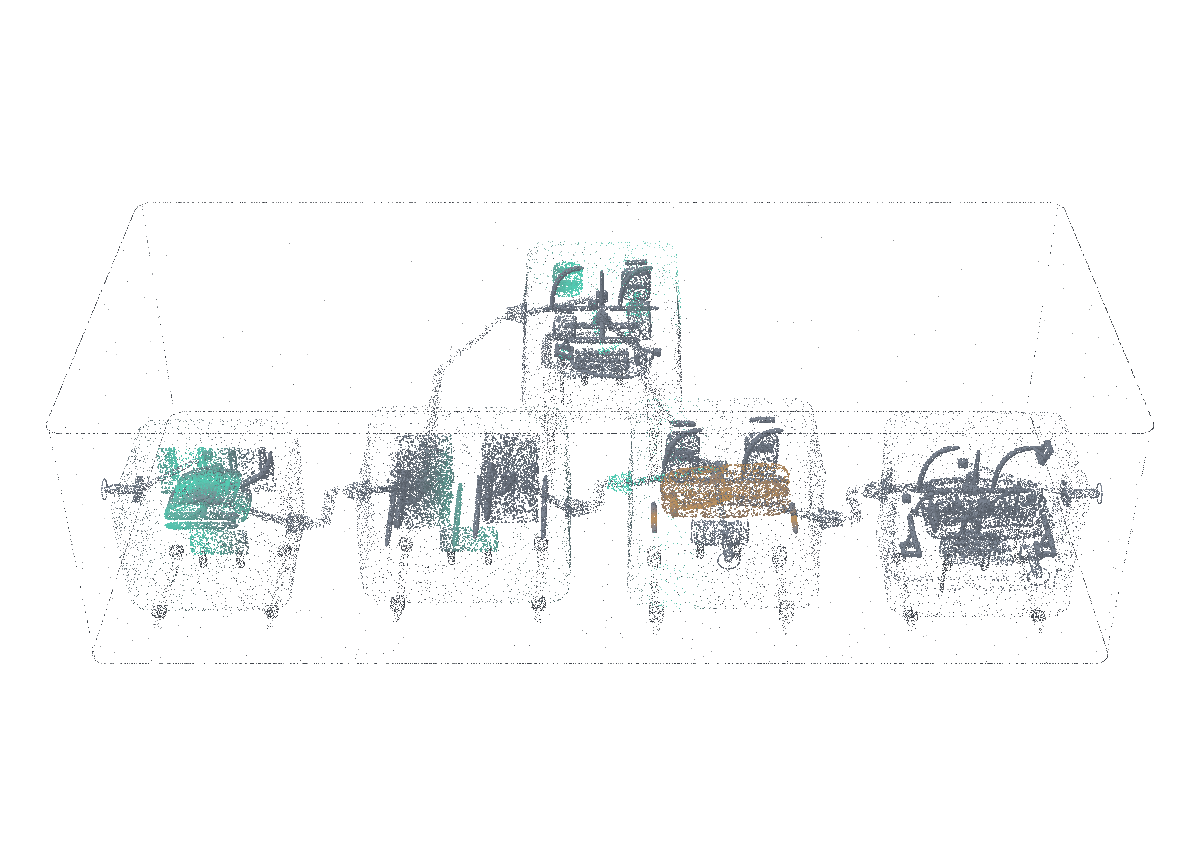
Evidence shelves and contract composition. An illustrative process for investigating claims, comparing contracts and retaining unresolved obligations.
Loading model
Technical descriptionsInteractive model unavailable. The static illustration and descriptions remain available.
Question and research trace
Retain the question, relevant prior work and explicit negative search results.
Technical data

Inputs

Proposed reuse and intended environment.

Transformation

Retain the question, relevant prior work and explicit negative search results.

Retained state and outputs

Claim and intended environment.

References, counterexamples and failed searches.

Constraints

Negative searches and counterexamples remain part of the research record.

Component and method register
Discover typed candidates while distinguishing capability from working method.
Technical data

Inputs

Source-connected component/method candidates.

Transformation

Discover typed candidates while distinguishing capability from working method.

Retained state and outputs

Mechanism identity, ports and contracts.

Workflow identity, evidence and lineage.

Constraints

A capability entry and a working method are different kinds of evidence.

Evidence and falsifier bench
Grade the specific claim and test whether the proposed verification can fail.
Technical data

Inputs

Specific claim, artifacts and existing evidence.

Actual harness/canary or reproduction result.

Actual result, including failure/refutation.

Transformation

Grade the specific claim and test whether the proposed verification can fail.

Retained state and outputs

Assertion/artifact/function/reproduction/replication remain distinct.

Refutations remain useful retained records.

Constraints

A proposed verification must be able to expose a failure.

Composition and obligation bench
Compare typed interfaces, QoS and environmental assumptions.
Technical data

Inputs

Producer guarantees and consumer assumptions.

Evidence grade and refutations, not automatic compatibility.

Explicit age/absence behavior and remaining environment obligation.

Transformation

Compare typed interfaces, QoS and environmental assumptions.

Retained state and outputs

Type, cadence, absence and ordering.

Undischarged assumptions remain attached to the assembly.

Constraints

Type compatibility alone does not discharge timing, ordering or environment assumptions.

Target experiment and adoption
Test the gap in the intended setting and retain the actual result for reuse.
Technical data

Inputs

A concrete gap to test in the target.

Independent behavior under the intended delayed/absent-input case.

Transformation

Test the gap in the intended setting and retain the actual result for reuse.

Retained state and outputs

Delayed/absent inputs and intended conditions.

Actual outcome and identified downstream use where available.

Constraints

A target-setting evaluation is evidence for that setting; it is not general proof.

An illustrative process for investigating claims, comparing contracts and retaining unresolved obligations.

Additional mechanisms are described in the technical reference.

What the research says

A claim is a hypothesis until someone tests it

17–33%1
Hallucination rates of legal research tools marketed as hallucination-free

A preregistered study tested tools sold as hallucination-free and found the claim did not hold. A test built to break a claim costs far less before funding than after launch, so each engagement starts with the test that could disprove the idea and keeps its negative results in the Vault.

Make the technical uncertainty explicit.

A proposed mechanism looks promising. The next step is to define what it should change and what evidence could disprove it.

We connect source research, alternative explanations and experiments to a specific technical effect. The resulting artifact retains its assumptions and the conditions for adoption.

Keep the evidence through composition.

A reusable result needs more than a successful demonstration.

  1. Challenge the mechanism

    Compare a defined baseline and investigate failure cases.

  2. Expose the contract

    Specify interfaces, environmental assumptions and unresolved obligations.

  3. Evaluate adoption

    Reproduce the effect in the intended system and retain the outcome, including negative findings.

Fund the next stage, or stop here?

A head of innovation decides whether an idea earns its next budget; each test result joins a record that later teams can check. Illustrative.

  1. 1 of 5The team states the effect it expects: a cheaper sensor that detects faults as well as the current one.
  2. 2 of 5The baseline and a test that could disprove the claim are fixed before anyone sees a result.
  3. 3 of 5The test runs; the result and the variants that failed both join the chain.
  4. 4 of 5Each entry belongs to the evidence record, so a reviewer can check later that no failed variant was dropped.
  5. 5 of 5The head of innovation reads the result with its assumptions and funds the next stage.Decision: Fund the next stage, or stop.
Select any part of the drawingScroll to step · Esc to skipFig. 1
  1. 1 of 4A second idea claims a faster calibration routine; its baseline and disproof test are fixed first.
  2. 2 of 4On held-out cases the routine shows no effect over the baseline.
  3. 3 of 4The negative result joins the record with its test conditions, so no later team pays to test the same idea again.
  4. 4 of 4The head of innovation stops the work and records the reason beside the result.Decision: Stop the work, with the reason recorded.
Select any part of the drawingScroll to step · Esc to skipFig. 1

Systems behind it

What Research & invention is built from.

Questions about Research & invention.

Does every engagement aim at a patent?

No. The output may be a component, method, feasibility decision or invention investigation. Patentability, filing and granted rights are separate questions.

Research & invention in the stack.

Works with

Contracts and evidence

Reusable knowledge with assumptions attached.

Delivery system

Applied engineering

Integrate and evaluate a selected result.

Technical reference1 further section

Keep the evidence through composition.

Challenge the mechanism. Compare a defined baseline and investigate failure cases.

Expose the contract. Specify interfaces, environmental assumptions and unresolved obligations.

Evaluate adoption. Reproduce the effect in the intended system and retain the outcome, including negative findings.

System story

From a research question to a technical invention

An illustrative engineering investigation into whether two components can be composed.

Follow the story

Which idea are you about to fund that nobody has yet tried to disprove?

Discuss a research problem