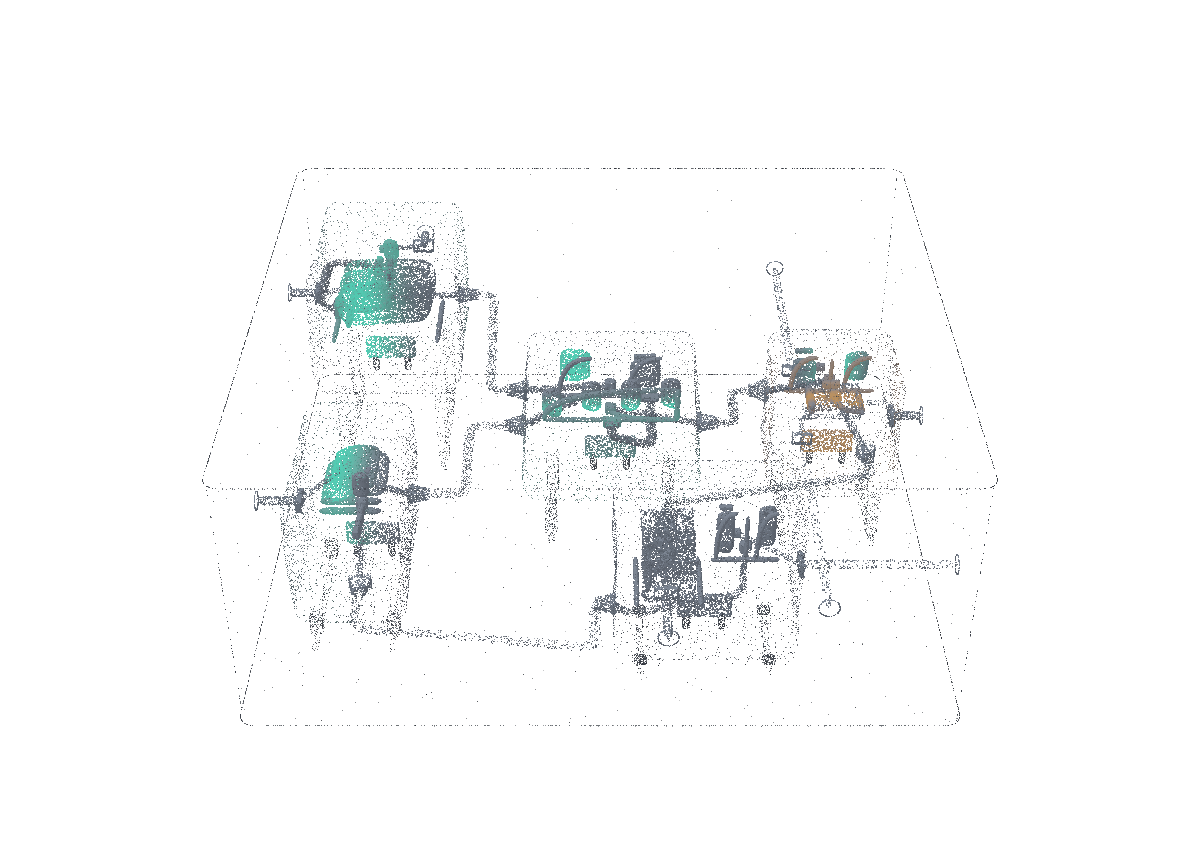
SuperSell is a sales application for businesses that answer customers directly, so that every answer uses today’s offers and capacity, and any commitment beyond approved policy waits for a person.
Application
Businesses
Commercial intelligence
Consent-aware outreach
Loading model
Relationship intake
Retain the expressed need, replies and invitation scope.
Inputs
An actual question or invitation.
Observed relationship state for the next relevant step.
Transformation
Retain the expressed need, replies and invitation scope.
Retained state and outputs
Person question, channel and previous replies.
Withdrawal, silence and human handoff remain distinct.
Constraints
Silence, withdrawal and a requested human handoff are distinct relationship states.
Business evidence and offer basis
Retrieve current offer facts and retain corrected assumptions.
Inputs
Source-connected current offer and capacity.
Later supported correction; earlier draft retains its earlier source basis.
Transformation
Retrieve current offer facts and retain corrected assumptions.
Retained state and outputs
Source, conditions and capacity basis.
Old and corrected assertions remain explainable.
Constraints
The source and conditions of an offer remain traceable when a fact is corrected.
Offer and response workbench
Join the actual need with current evidence and assemble a suitable draft.
Inputs
Permitted need and relevant earlier conversation.
Current facts, conflicts and effective conditions.
Transformation
Join the actual need with current evidence and assemble a suitable draft.
Retained state and outputs
Need, terms and actual capacity.
Proposed response, assumptions, cost and next step.
Constraints
Suitability depends on the expressed need and actual offer capacity.
Review and communication interface
Check grounding and applicable communication conditions under the shared mission.
Inputs
A grounded draft and identified next step.
Applicable principal/recipient/channel consent and approval or valid class grant.
Transformation
Check grounding and applicable communication conditions under the shared mission.
Retained state and outputs
Exact principal, recipient and draft.
Competing proposals share intention and effect identity.
Constraints
The exact draft, recipient and communication authority must agree.
Conversation and outcome register
Keep proposal, authorized send and actual response distinct.
Inputs
Proposed/authorized/issued state; no invented reply.
Acknowledged or uncertain send under the original identity.
Independent reply or withdrawal.
Transformation
Keep proposal, authorized send and actual response distinct.
Retained state and outputs
Effect receipt and unresolved result.
Actual reply, continued consent and defined outcome basis.
Constraints
A proposal, an authorized send and an actual reply are separate records.
Technical descriptionsInteractive model unavailable. The static illustration and descriptions remain available.
Relationship intake
Retain the expressed need, replies and invitation scope.Technical data
Inputs
An actual question or invitation.
Observed relationship state for the next relevant step.
Transformation
Retain the expressed need, replies and invitation scope.
Retained state and outputs
Person question, channel and previous replies.
Withdrawal, silence and human handoff remain distinct.
Constraints
Silence, withdrawal and a requested human handoff are distinct relationship states.
Business evidence and offer basis
Retrieve current offer facts and retain corrected assumptions.Technical data
Inputs
Source-connected current offer and capacity.
Later supported correction; earlier draft retains its earlier source basis.
Transformation
Retrieve current offer facts and retain corrected assumptions.
Retained state and outputs
Source, conditions and capacity basis.
Old and corrected assertions remain explainable.
Constraints
The source and conditions of an offer remain traceable when a fact is corrected.
Offer and response workbench
Join the actual need with current evidence and assemble a suitable draft.Technical data
Inputs
Permitted need and relevant earlier conversation.
Current facts, conflicts and effective conditions.
Transformation
Join the actual need with current evidence and assemble a suitable draft.
Retained state and outputs
Need, terms and actual capacity.
Proposed response, assumptions, cost and next step.
Constraints
Suitability depends on the expressed need and actual offer capacity.
Review and communication interface
Check grounding and applicable communication conditions under the shared mission.Technical data
Inputs
A grounded draft and identified next step.
Applicable principal/recipient/channel consent and approval or valid class grant.
Transformation
Check grounding and applicable communication conditions under the shared mission.
Retained state and outputs
Exact principal, recipient and draft.
Competing proposals share intention and effect identity.
Constraints
The exact draft, recipient and communication authority must agree.
Conversation and outcome register
Keep proposal, authorized send and actual response distinct.Technical data
Inputs
Proposed/authorized/issued state; no invented reply.
Acknowledged or uncertain send under the original identity.
Independent reply or withdrawal.
Transformation
Keep proposal, authorized send and actual response distinct.
Retained state and outputs
Effect receipt and unresolved result.
Actual reply, continued consent and defined outcome basis.
Constraints
A proposal, an authorized send and an actual reply are separate records.
An illustrative process for preparing and correcting an offer before communication.
An expressed need and current business evidence meet in the response workbench. Review checks the draft, while retained context supports revision when the facts change.
A reply, invitation or consent establishes the permitted personal channel and its scope.
Retrieve the person’s context and approved business material to compose a relevant response.
Retain the person’s need as business facts change and revise the proposal. Keep any permitted communication and observed reply with the conversation.
Your business context. A better offer. A conversation worth having.
Correct one assumption. Change the next conversation.
An offer still reflects last month’s availability. Before the next customer conversation, the seller needs the proposal to use the business’s current capacity and corrected facts.
Correct the business memory
A seller replaces an outdated delivery assumption with the current capacity and supporting source.
Starts with
An offer still based on last month’s availability.
Produces
Corrected context that informs the next proposal.
Rework the offer
The proposed offer and the next useful action use the corrected facts. Reasons, assumptions and expected cost remain available to the seller.
Produces
A draft that fits the actual capacity.
Invite the conversation
Listening, qualification, composition and checking have separate work and permissions. The person decides whether to continue the exchange.
Condition
A prepared message remains distinct from an authorized send and its observed result.
Inside the mechanism. A corrected fact changes the offer.
Illustrative scenario. A seller has limited implementation capacity. An outdated assumption has reached a proposed offer.
The draft promises a date the business cannot support.
The proposal depends on an old capacity note in the business memory.
Business fact
The earlier note says a team is available this month.
Offer draft
Begin implementation immediately.
Conversation
No message has been authorized.
Useful check
Inspect the source behind the promised date.
The next proposal fits the actual capacity.
The seller corrects the source. Offer development and the proposed next conversation use the updated context.
Corrected fact
The next team is available next month.
Revised offer
Scope the work now; propose a later implementation date.
Next action
Invite a planning conversation with its assumptions and cost visible.
Observation
Record the person’s actual response separately from the proposed send.
Who answers a customer at 23:00?
A sales director sets the policy once; SuperSell answers inside it and hands the rest to a person. Illustrative.
1 of 4At 23:00 a customer asks whether the spring service package still includes installation.
2 of 4SuperSell drafts the answer from the business’s current offers and capacity, and keeps the source of each statement.
3 of 4The answer stays inside the terms the sales director approved, so it is sent tonight.
4 of 4In the morning the sales team sees the question, the answer and the sources it used in one thread.
Select any part of the drawingScroll to step · Esc to skipFig. 1
1 of 4A customer asks for a discount larger than the published terms allow.
2 of 4SuperSell drafts a reply from the current terms, but a price beyond them is a commitment it cannot make.
3 of 4The request is held for a person, and the customer is told that someone from the team will follow up.
4 of 4The sales director decides on the exception, and the decision and its reason join the conversation.Decision: Grant, counter or decline the discount.
Select any part of the drawingScroll to step · Esc to skipFig. 1
1 of 4A returning customer asks to renew on last year’s terms.
2 of 4SuperSell finds last year’s offer and today’s, each with its date, and sees that the terms have changed.
3 of 4Last year’s terms are no longer in force, so SuperSell does not offer them. That branch is closed and recorded.
4 of 4It answers with today’s terms and explains what changed since the last order. The customer decides whether to renew.Decision: Renew on today’s terms or not.
Select any part of the drawingScroll to step · Esc to skipFig. 1
Sales growth at retailers running their own AI agents, against others (a correlation)
Customers now ask an assistant before they ask a salesperson, and retailers that run their own agents report faster growth, though those retailers chose themselves. Inside the business, 56% of workers say the only way to get information is often to ask someone, which is why a late question waits until morning. SuperSell answers from the business’s current terms and passes anything beyond policy to a person.4
Where it changes the work.
Illustrative situations, connected to the mechanisms that make them possible.
Answer the person who invited you in
People and service businesses
Someone asks for help in a private thread and expects a relevant answer.
How it works
The conversation retrieves permitted personal context, the approved offer and earlier replies.
What changes
The answer can address that person’s request while preserving their channel and contact preferences.
Keep a small team’s commercial memory
Founders and small teams
A prospect moves between a public page, a question and a private conversation.
How it works
Person, offer, touch and conversation records share one commercial context.
What changes
The team can continue the relationship without repeatedly reconstructing the business or the discussion.
Improve a campaign from its outcomes
Commercial organizations
More activity alone does not reveal which approach helps the audience.
How it works
Registered experimental arms connect channel and creative choices to observed outcomes and stopping rules.
What changes
The team can make an inspectable decision about what to continue, change or stop.
Scroll to explore · Esc to skip
Begin with the person’s question.
Someone is considering an offer. They want a relevant answer, a clear explanation and room to make their own decision.
SuperSell’s experience direction starts with an invitation into that conversation. Business knowledge supplies the context: what is offered, who it suits, what the terms mean and which next step would be useful.
The personal space belongs to the person. Assistance should earn a continued place through relevance and consent. This invitation-led experience guides product development; its usefulness must be demonstrated with real interactions.
The same relationship, seen from both sides.
A helpful exchange depends on what the person needs and what the business actually knows.
For the person
Ask about suitability, compare an offer’s conditions and request useful material. Decide whether to continue or involve a human.
For the business
Keep offers, conversations and follow-up connected to their sources. An answer should remain consistent with the current business context.
Across the relationship
Retain changes and conflicting assertions with their source and time. A previous answer should be explainable when an offer changes.
A suggested response and a sent message are different events.
Agency Engine supplies the product foundation for domain context and work processes.
Proposed communications are tied to a principal, recipient and the relevant consent and approval conditions. A business can examine what a response relies on before it becomes an external action.
A useful first engagement can focus on one offer and one assistance journey. Evaluate resolved needs, accepted next steps and continued consent; message volume alone says little about whether a person was helped.
Two useful assistants should not send the same intention twice.
Two work cells can prepare the next step for the same seller and channel. Coordination belongs to their shared mission.
A shared semantic lock relates the competing work to the same intention. Identity and channel rate accounting, together with a stable effect record, keep the proposals from becoming independent conflicting actions.
A mission receipt distinguishes what was proposed, authorized and observed, alongside what remains unknown. A campaign-learning design fixes its population, observation window and mature trial definition before judging the result; it does not promise calibrated revenue advice.
Questions about SuperSell.
Is SuperSell an automatic outreach service?
Its current experience direction is invitation-led assistance. Any commercial workflow needs explicit channel, recipient and consent conditions; the product should fit those relationships.
What can we explore first?
Choose one customer question and the business knowledge needed to answer it. Prototype the person’s experience and the business review process together.
Technical reference5 mechanisms · 2 further sections
The mechanisms underneath.
The technical choices that give SuperSell its particular behavior.
Invitation-led assistance
The current experience direction begins with a person’s expressed need and an invitation into their conversation.
Source-aware business context
Offers and business assertions can retain origin, effective conditions and disagreements rather than becoming one undifferentiated prompt.
Two views of the relationship
The person’s question and the business’s review process are designed together so each can understand the proposed next step.
Communication with conditions
Proposed communication is related to a principal, recipient and the relevant consent and approval conditions.
A bounded first product
Modular product composition supports a useful core around one offer or journey before additional capabilities are introduced.
Begin with the person’s question.
SuperSell’s invitation-led experience connects a person’s question to the business knowledge needed for a useful answer. Offers, context, consent and the next appropriate action belong to one continuing relationship.
The same relationship, seen from both sides.
For the person. Ask about suitability, compare an offer’s conditions and request useful material. Decide whether to continue or involve a human.
For the business. Keep offers, conversations and follow-up connected to their sources. An answer should remain consistent with the current business context.
Across the relationship. Retain changes and conflicting assertions with their source and time. A previous answer should be explainable when an offer changes.